Friday, 24 August 2012

Photo: John Knight
Guest blog: A day in the life of Brighton novelist, Sarah Rayner

I'm delighted to introduce my guest blogger of the week, Sarah Rayner. There's so much that I identify with in her post! I, too, live by the sea which is a real novelty to me, after living for years near London. I also go jogging, much to the amusement of my children who take the mick, mercilessly. I actually call it dog-jogging because my lab/spring leads the way! Like Sarah, I go into London once a week to Soho where I belong to an organisatiion called The Freelance Media Group. We're a network of journalists who meet for a chat and to hear a speaker. It's my job to find someone every month....Anyway, do read about Sarah's writing day. It's always fascinating to hear how someone has achieved success! Janey x


I often get asked about my life as an author, so I thought I’d share a ‘typical’ day...

For years I used to have to get up and out of the house really early, as I was working in London as a freelance advertising copywriter and I live in Brighton. So like the characters in my novel One Moment, One Morning, I’d be on the 7:44 train. I’m very lucky in that the success of that novel has now enabled me to be an author full time, so these days I work from home. Nonetheless, wake-up time is often horribly cruel, as my partner, Tom, is a freelance chef and likes when possible to work the first shift of the day. I grumble like mad, and if it’s very early usually manage to go back to sleep, otherwise I lie in bed, thinking. It’s often when I have my best ideas - I ponder what should happen next in a novel, what’s missing from a character and incidents that might best illustrate what I’m trying to say. If I’m right in the thick of writing, I may get up and start typing while I’m still in my PJs.

Several times a week I go running. Sometimes I scoop up my friend who lives in nearby Hove, in which case we also gossip, which is wonderful, as before we know it we’ve jogged a reasonably long way. Otherwise I go alone – I find running is perfect for letting ideas settle. It feels a bit like when you pour rice in a jar and then bang the bottom and the grains become more compact, neater.

If possible I like to experience first-hand the places I’m writing about. For instance in The Two Week Wait, my latest book, there’s a passage where one of the characters, Adam, goes to a café on the promenade in Hove called The Meeting Place, and I wrote that sitting there with my morning coffee. Other characters in The Two Week Wait, Cath and Rich, live in Yorkshire. I lived in Leeds in the 1980s and Tom’s family is from there, so I went and stayed with them to remind myself of the city.

Apparently Anthony Trollope used to write 1000 words a day, but I’m nowhere near that fast or disciplined. For a first draft, I set myself a target of 500 words a day, which makes it relatively easy to exceed it. If I’m on a roll I continue – the most I’ve ever accomplished is 3000 words in a day - but often I only manage the minimum. If I’ve managed to write a lot, in the late afternoon I might head to my local beauty parlour for a manicure. It’s a teeny salon a stone’s throw from our house where customers from all walks of life congregate – it’s inspirational for getting a sense of how different people talk.

Every few weeks I head up to Soho for my book group, The Vicious Circle. Each session my friends and I aim to read a different book. We’re like most book groups – we don’t always love all we read, and I’ve found the best discussions are often for those books where some of us have enjoyed it and others not. When we all agree it can curtail debate, but then we spend the evening catching up instead.

If we’re not out, then Tom and I have dinner, and often we indulge in a DVD. We both would rather watch a quality series such as The Killing, Mad Men or In Treatment, than trash telly. That said, if Seb, Tom’s son, is with us – which he is every weekend – we’ll often watch a more light-hearted film – oh, and eat chocolates.

Bedtime varies; if I’m coming back from London it might be midnight, but usually it’s much earlier, as I no longer have the stamina I did when I was in my teens and twenties for late nights.
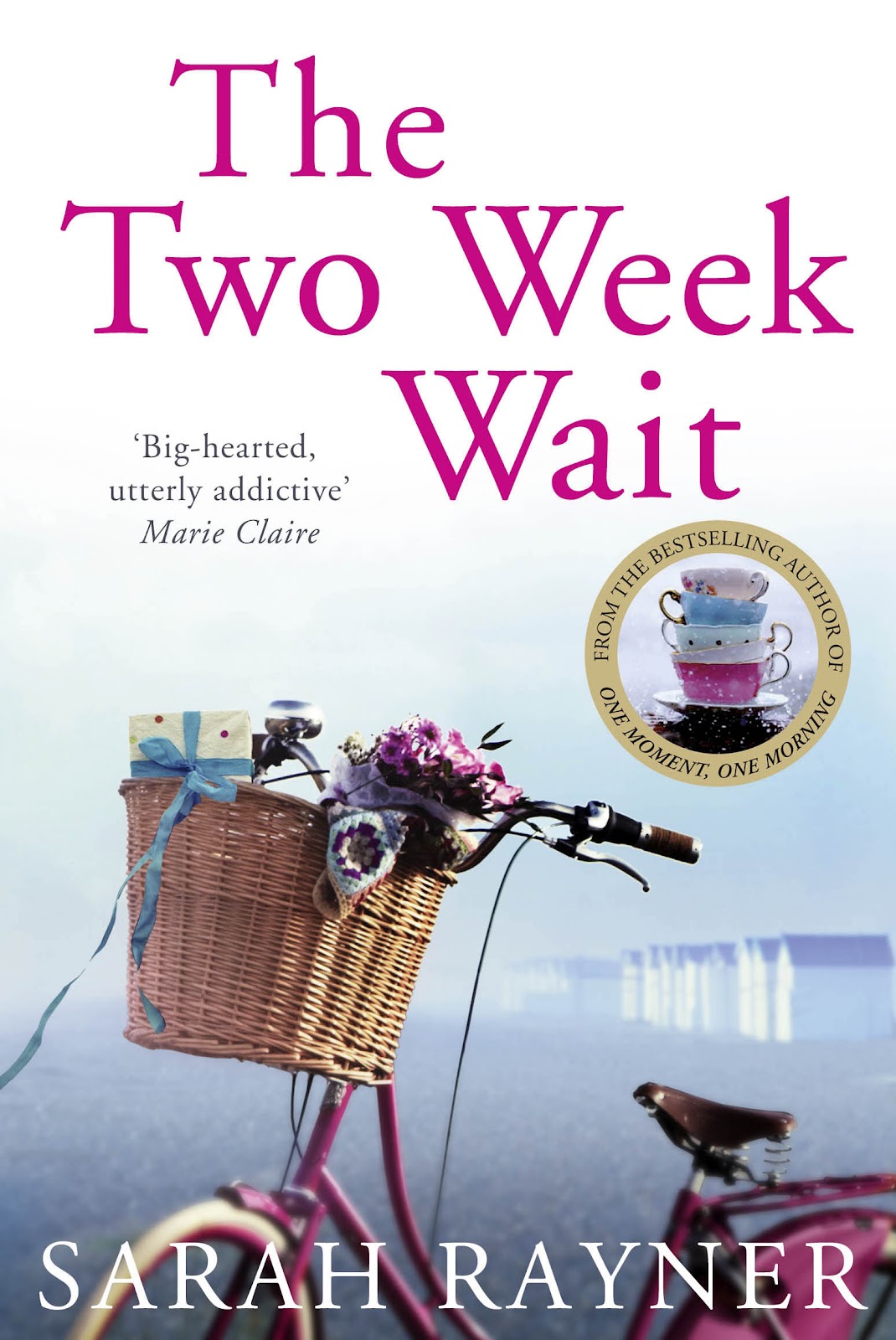
One Moment, One Morning and are both available now in paperback (Picador, RRP £7.99) in all good bookshops and on Amazon.


You can find out more about Sarah at her website, www.thecreativepumpkin.com or follow her on Twitter
Tuesday, 21 August 2012

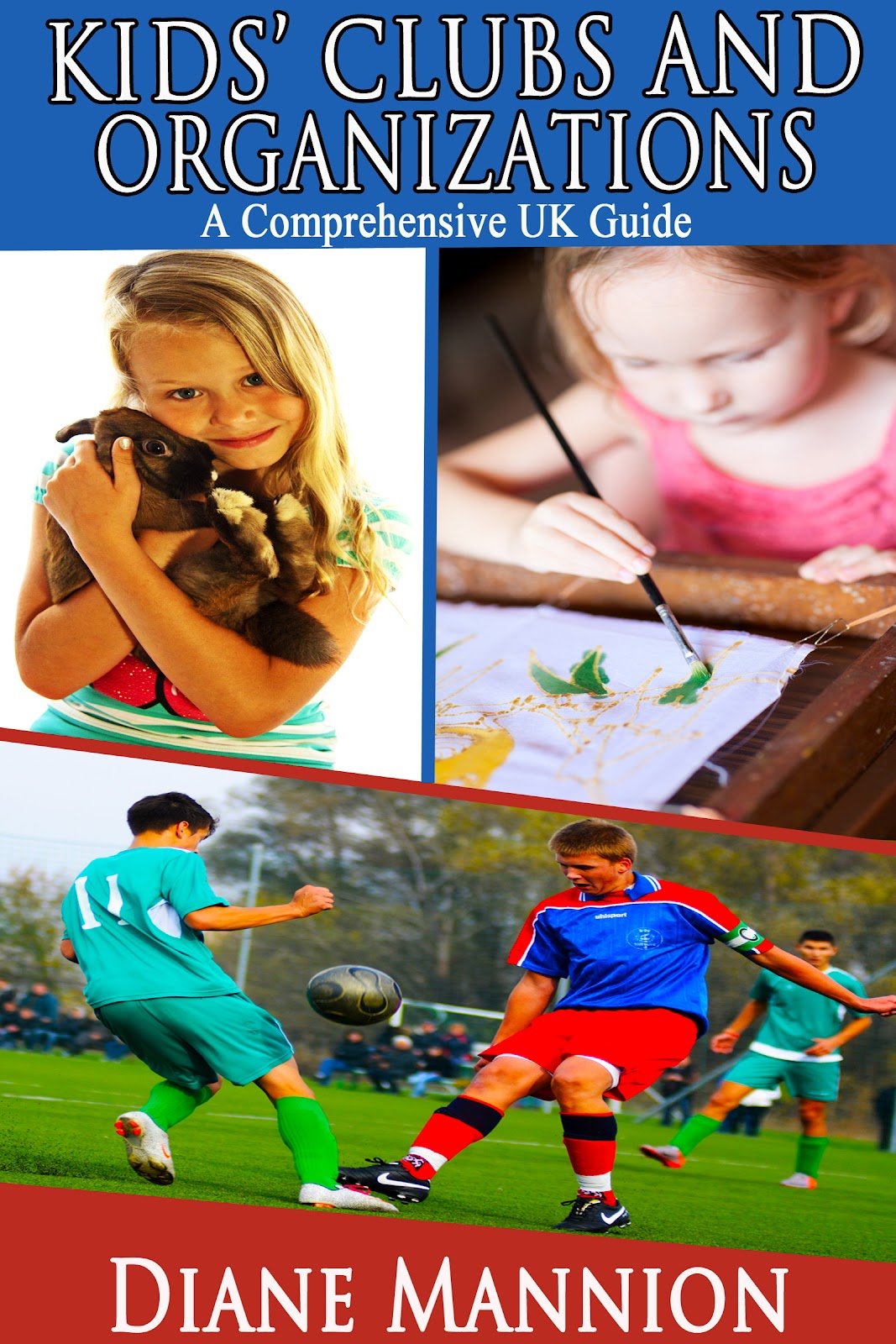
How to Find Low Cost Children's Clubs by Diane Mannion

Many families are struggling financially due to the current recession and this can mean having to cut spending. One of the areas where parents may be tempted to reduce expenditure is membership of various kids' clubs and organizations. The costs for these can really mount up especially if you have more than one child attending a few clubs a week. However, it is possible to find low cost children's clubs and, in some cases, attendance is free.

These clubs offer enriching activities for children and enable them to gain valuable skills outside of the classroom. It's just a matter of knowing how to find the low cost options.

Here are some tips to help you trim the cost of kids' clubs:


1) Generally, charges for children's clubs operated by the public sector are lower than those run by the private sector. However, this is not a hard and fast rule and you may be able to find some clubs in the private sector that charge very little.

It is a good idea to start with public sector kids' clubs. Look out for clubs offered by libraries, art galleries and leisure centres as a starting point, but bear in mind that Local Authority provision won't be limited to these public buildings only.

2) Another inexpensive source of children's clubs is through charities and voluntary groups, including the church. So, for instance, you may find that your local church runs a parent and toddler group, or a playgroup, but also has a Boys' or Girls' Brigade for older children.

There are many charities that have children's clubs. Some are set up specifically for children or young people, such as The Duke of Edinburgh's Award but for others the children's club forms part of their activities as a whole.

3) Some private organizations run discounted schemes during school holidays. For example, hotel chains that have a leisure club may also have a timetable for children. Often they will run a couple of activities for children in the evenings or weekends, but increase the number of activities during school holidays.

You may find that if you are an adult member of a leisure club, you can obtain child membership at a preferential rate. Additionally, children's activities are not always restricted to those that are sports related. One such chain is Village hotels, which are part of the De Vere group.

Large arts supplies shops are another type of private enterprise that often put on a programme of events during school holidays. These are designed to entice you into the shop but it isn't compulsory to make a purchase once you are there.

4) You may also find groups that offer discounted rates during term time for pre-school children. For example, many soft play activity centres have special sessions for pre-schoolers, which are charged at a much lower rate than their usual charge. However, these will only usually operate when older children are in school.

5) When you enrol your children into various clubs don't forget to factor in any associated costs in addition to the weekly attendance fee. These can increase the cost substantially so it is best to be aware of them before deciding whether your children should join. For instance, these can include medals, certificates, sports kits and dance costumes.

6) Bear in mind that some clubs will apply a discounted rate if there is more than one member from the same family so it is worthwhile enquiring if you have more than one child.

7) Cost options can depend on the type of group and there will be more avenues to explore for certain interests than for others, which will enable you to shop around. For example, if your child is interested in arts and crafts, you could try local art galleries, schools, colleges, crafts centres, and shops that sell arts and crafts supplies.

Lastly, if you live in an area that doesn't have an abundance of low cost kids' clubs it may be possible to start your own. Parent and Toddler groups are a good example and you can get lots of information and advice on starting your own group from either the Pre-school Learning Alliance or from your local Family Information Service .

This guest blog was written by Diane Mannion ( www.dianemannion.co.uk ) who is the author of "Kids' Clubs and Organizations - A Comprehensive UK Guide". This book is the definitive guide to the wide variety of UK kids' clubs and has numerous sources of further information. A Kindle version is available at: , with a print version scheduled for release in September.

Thursday, 16 August 2012

10 questions with Rosanna Ley (The Villa)

1) Where do you write?
First draft is usually in a notebook - I like the process of mind to pen to paper. It works for me. So I can write in a café or or on a park bench or wherever... Favourite writing place is anywhere with a sea view!

2) What is the first book you remember reading?
I read the AA Milne poems about Christopher Robin and co - When we were very young/ now we are six (I think that's right) and it turned me on to poetry at a very young age! I learnt loads of them and can still recite 'James, James, Morrison, Morrison, Weatherby George Dupree, took great care of his mother though he was only three... (I mean - how useful is that??) First fiction was definitely Enid Blyton - the Secret Seven doing something or other terribly exciting along with lashings of ginger beer and a spread of peanut butter sandwiches...

3) Do you have a favourite literary character?
Can't decide between Elizabeth Bennett and Pooh Bear. I think it has to be Pooh.

4) Is there a book by an another author that you wish you had written?
Almost anything by Anita Shreve.

5) What's the best advice you have ever received?
Never give up. You can do it.

6) What's the worst advice you have ever received?
Give up. What makes you think you can ever become a writer? (Although come to think of it that might be the best because I'm very stubborn and like to prove negative people wrong...)

7) What are you currently reading?
The Glass Palace by Amitav Ghosh for research purposes and The Kashmir Shawl by Rosie Thomas for light relief.

8) Who is your hero or heroine?
Leonard Cohen is my musical hero and my heroine is every Suffragette who sacrificed something to give women a voice.

9) Where are you happiest?
In West Dorset by the sea and in El Cotillo, Fuerteventura by the sea.

10) Who would be at your dream dinner party (can be living or dead)?
Leonard Cohen, DH Lawrence, Bob Dylan, Jane Austen, my husband and my children.

Rosanna's website
 
Read extracts from The Villa


Three women, all seeking answers. Will Villa Sirena bring them together – or drive them apart?

‘Beautifully written, warm and romantic... the perfect holiday read’ (Rachel Hore, author of ‘A Gathering Storm’)
Newer Posts Older Posts Home